MrDubuque.com
  • Home
  • Biology
    • Biology Resources >
      • Online Video Lessons
      • Student Generated Notes
    • Biology Calendar
    • Bio Blog
    • Missed School?
    • Big Picture Biology
  • STEM9 (No Longer Offered)
    • STEM9 Homepage
    • STEM9 Calendar
  • Science & Engineering Fair
  • Mr. Dubuque

#BioDub Sending a Message: DNA/RNA Analogy

1/14/2020

 
Picture
DNA is in the nucleus and carries the instructions to make proteins (amino acid sequences) in its sequence of bases (ATGC's). The ribosomes in the cytoplasm need the instructions to make specific proteins, but the DNA is too large a molecule to leave the nucleus and cannot give the "message" to the ribosomes directly. DNA will transcribe its message into smaller pieces of RNA which can leave the nucleus and deliver the instructions ("message") to the ribosomes.

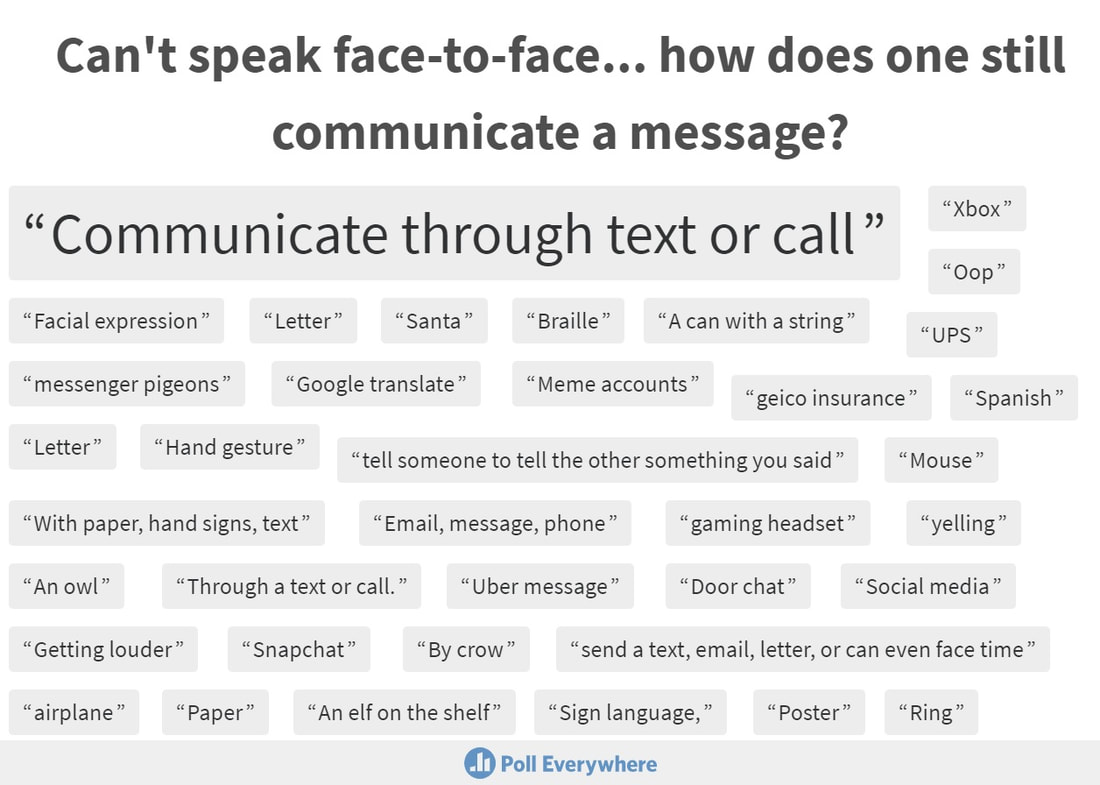
Above are student responses to the analogy of two people needing to communicate while not being able to speak face-to-face.
Unit 4: Genetics & Heredity

#BioDub Candy DNA

1/7/2020

 
Students used candy to model the structure of DNA. They were expected to create an assigned sequence of DNA nucleotides and then likewise create the complimentary DNA strand.

In DNA, each nucleotide consists of a deoxyribose (red licorice), a phosphate (marshmallow), and a nitrogenous base (Skittle). It is important that the deoxyribose and phosphates make up the back-bone and that the bases are bound to the deoxyribose.

The Skittle bases are as follows:
  • Thymine (T) - Purple
  • Adenine (A) - Red
  • Guanine (G) - Green
  • Cytosine (C) - Yellow

Based on the original stand of DNA, the complimentary strand of DNA was created using the correct base pairs: G to C, C to G, T to A, A to T.

In this example, the students were assigned the sequence CAGCA and determined the complimentary sequence GTCGT.

The original DNA strand (left side) was glued in place for a later activity (transcription).
​
Unit 4: Genetics & Heredity

#BioDub Click A Pic - DNA Online Activity

1/6/2020

 
Picture
Picture
Unit 4: Genetics & Heredity

#BioDub Diagram from the Chapter 12-2 Notes

1/6/2020

 
Picture
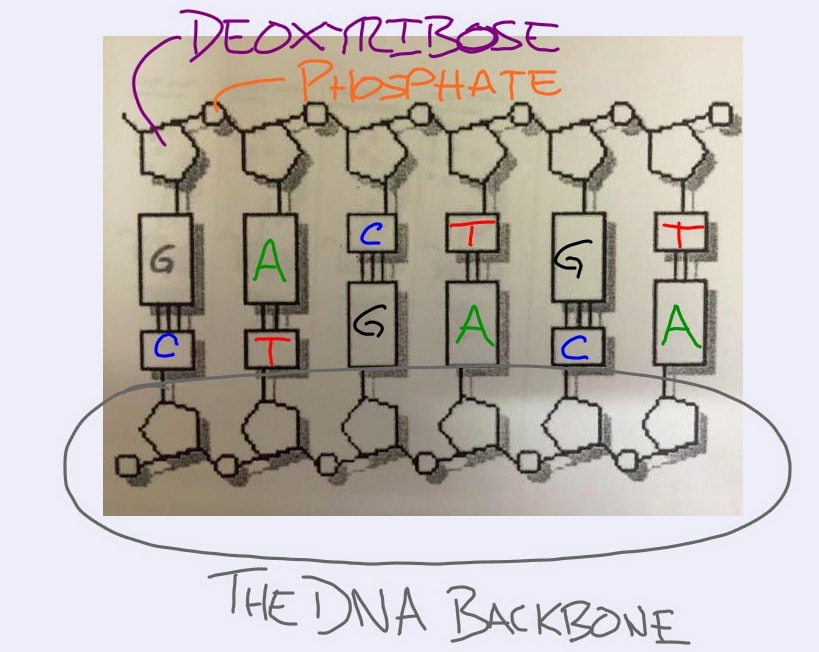
Please note the following:
  • One DNA nucleotide consists of a deoxyrobose, a phosphate, and a nitrogenous base
  • There are 4 different bases: adenine, thymine, guanine, and cytosine
  • Deoxyribose and phosphate make up the backbones
  • The bases connect the two strands
  • The bases are bound to the deoxyribose
  • Guanine (G) binds to cytosine (C) with 3 hydrogen bonds
  • Adenine (A) bind to thymine (T) with 2 hydrogen bonds
  • A and G are purines, larger molecules
  • T and C are pyrimidines, smaller molecules

Unit 4: Genetics & Heredity

#BioDub Click the Pic - Cell Division Game

12/17/2019

 
Picture
​Unit 4: Genetics & Heredity

#BioDub Cellular Respiration Map

12/9/2019

 
Picture
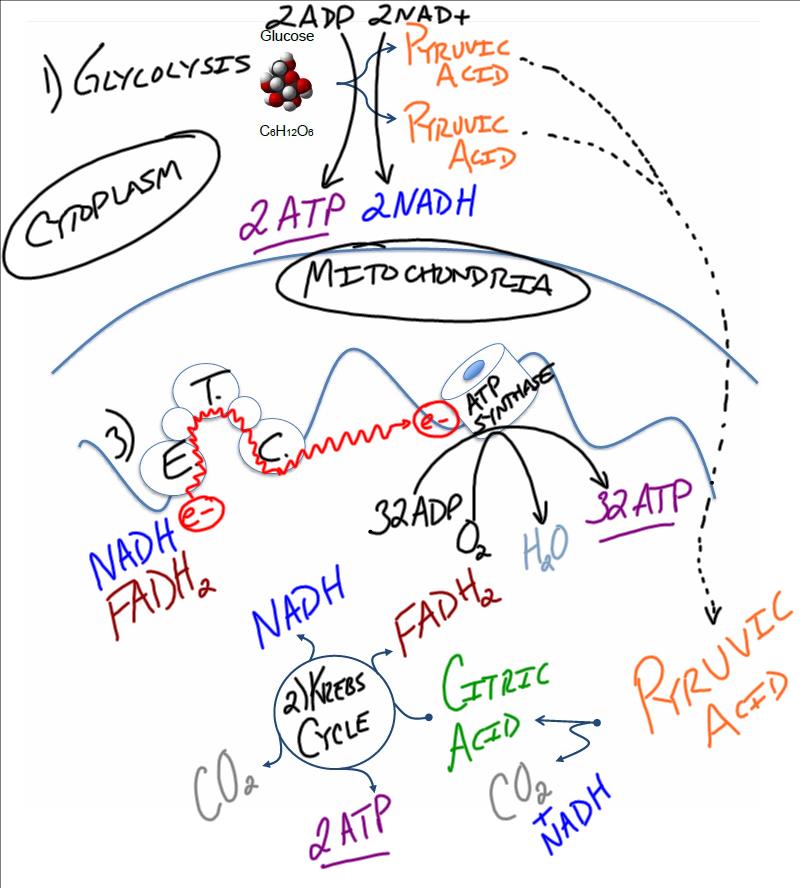
For a blank copy of the map, go HERE

Unit 3: Life, Cells, & Energy

#BioDub - Labelled Chloroplast Diagram

11/22/2019

 
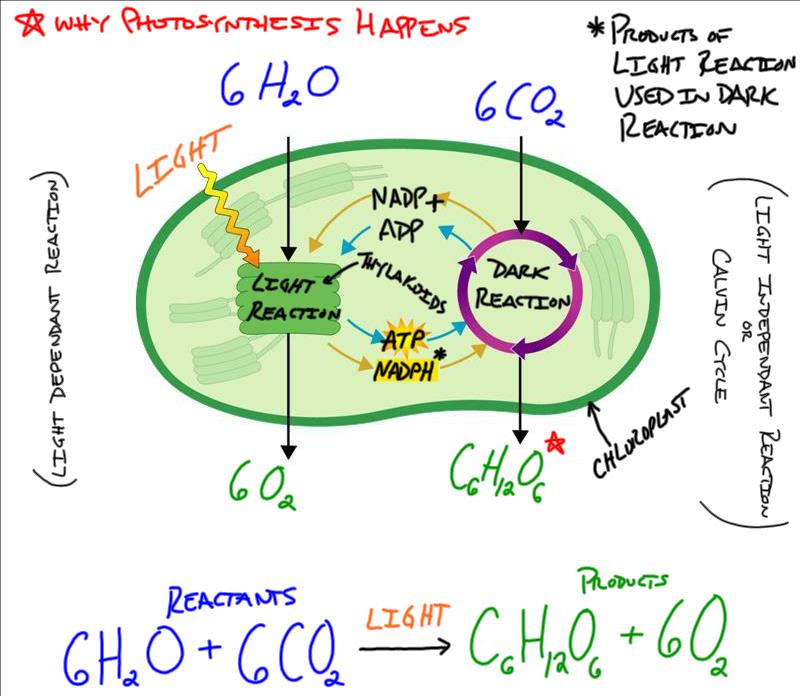
Click the Pic for a closer view
Picture
Click HERE for an unlabeled copy of the diagram
Unit 3: Life, Cells, & Energy

#BioDub Click the Pic - Waterweed Lab Simulator

11/18/2019

 
Picture
Worksheet TBA
Unit 3: Life, Cells, & Energy

#BioDub Experiment - Using an Egg as a Cell Model to Show Osmosis

11/13/2019

 
Picture
Picture
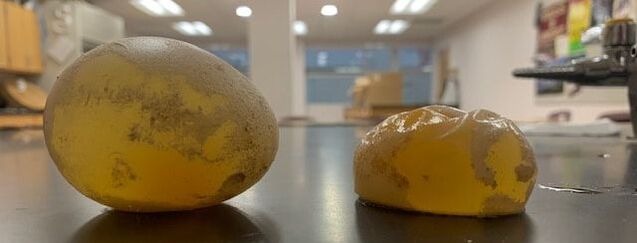
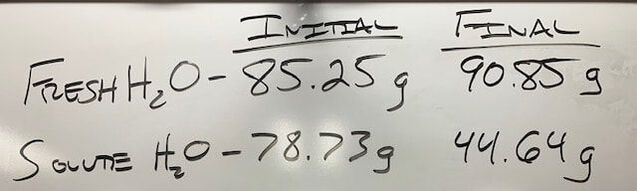
Both eggs sat in vinegar solution over the weekend and then placed in two different solutions: freshwater and high solute solution (corn syrup). Egg 1 (the egg on the left) was placed in freshwater. Notice that after being in freshwater for 24 hours, it gained 5.6 g of mass. This is an example of the effects of a hypotonic solution where water is initially at a higher concentration outside the cell and enters the cell to reach equilibrium. Egg 2 (the egg on the right) was placed in a high solute solution (corn syrup). Notice that after being in high solute solution for 24 hours, it lost 34.09 g of mass! This is an example of the effects of a hypertonic solution where water is initially at a higher concentration inside the cell and leaves the cell to reach equilibrium.
Unit 3: Life, Cells, & Energy

#BioDub Candy Corn as a Cell Membrane Lipid Bilayer Model

11/5/2019

 
The cell membrane is made of two layers of lipids. On each lipid molecule, there is a part of the molecule that repels water (hydrophobic) and a part that does not repel water (hydrophilic). The only way the lipid molecules could arrange themselves along the border between the inside of the cell (where there is water) and the outside of the cell (where there is also water) is to line up in two layers, back-to-back. The hydrophilic sides of molecules face the water in or out of the cell, while the hydrophobic portions are protected within.

In this activity, candy corn modeled the lipid molecules where the yellow part is hydrophilic and the orange/white portion is hydrophobic.
​
Unit 3: Life, Cells, & Energy
<<Previous
Forward>>

    Current Unit (Biology)

    Unit 1: Biology Skills

    Prepare for your next assessment...

    Study Guide

    Schoology

    Picture

    Picture

    Online Video Lessons

    MCAS Countdown

    Picture

    Mr. Dubuque's
    ​Song of the Week

    Artist: Radiohead
    Title: Idioteque
    Picture
    Picture
    Picture

    Biology Calendar

    Picture

    STEM9 Calendar

    Picture

    Fellow Teachers

    Mrs. Goodwin
    ​
    Mr. Gordon
    Mrs. Kenny
    Ms. Garrett

    Picture

    Picture

    Categories

    All
    #BioDub
    #ChemistryOfLife
    #ClassActivity
    #Ecology
    #EvolutionBiodiversity
    #GeneticsHeredity
    #GIF
    #Homework
    #HumanAnatomy
    #IntroToBio
    #Lab
    #LifeCellsNRG
    #Links
    #MTFEMCAS
    #Outbreak
    #Review
    #SOTM
    #SOTW
    #STEM9
    #torssweater
    #Video


    Picture

    Picture

    RSS Feed